Technical & Engineered Fibers
grade selection, lot traceability, regulatory review and requested TDS support for technical & engineered fibers programs.
DuPont delivers Technical & Engineered Fibers, Polymer, Polyester & Nylon Resin for the industrial chemical fibers channel. We help materials engineers, downstream mills, compounding teams and OEM qualification groups compare hand, performance, documentation and supply readiness before bulk commitments.
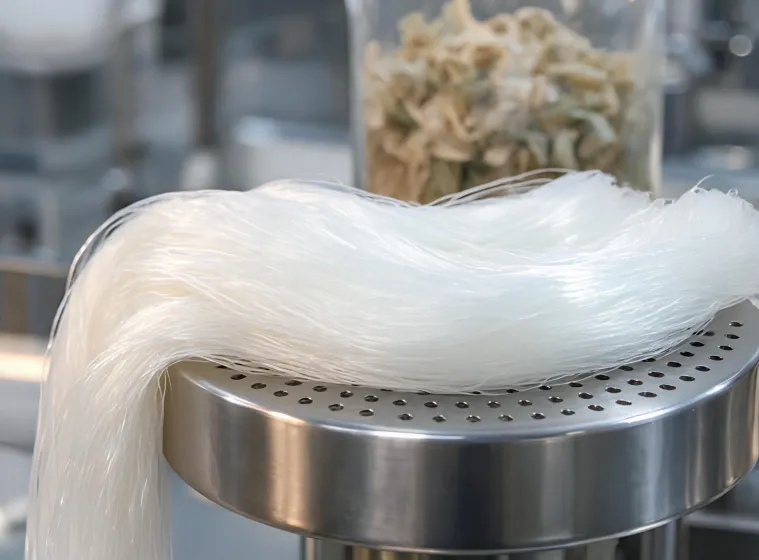
DuPont home page is paced to a buyer's first-pass review — scope, capability, evidence, channel — each in a self-contained block. DuPont keeps prior-year Technical & Engineered Fibers qualification artifacts accessible for re-order conversations.
| Review Area | Typical Evidence | Buyer Use |
|---|---|---|
| Construction | fiber, knit, weave or polymer grade notes | shortlist compatible materials |
| Performance | lab method context and internal test range | compare against application limits |
| Compliance | certificate routing and SDS request path | prepare audit packets |
grade selection, lot traceability, regulatory review and requested TDS support for technical & engineered fibers programs.
Use the home page as a starting map: DuPont Technical & Engineered Fibers categories link to detailed Technical & Engineered Fibers and Polymer, Polyester & Nylon Resin pages; services and sustainability blocks link to dedicated qualification packets. DuPont treats every Technical & Engineered Fibers brief as a candidate for multi-year program continuity.
DuPont Technical & Engineered Fibers programs run on documented evidence — Technical & Engineered Fibers samples, Polymer, Polyester & Nylon Resin qualification packets, and ASTM D638, ISO 1133, ISO 527, ISO 11357 test references kept current per article. DuPont delivers Technical & Engineered Fibers packets to the buyer's audit team in one consolidated record.
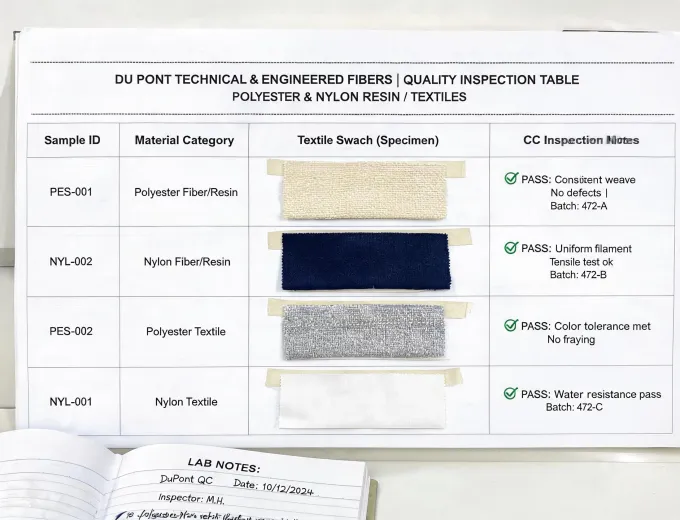
Each block answers one question a sourcing reviewer needs answered before scheduling a sample — and links to the longer artifact behind it. DuPont archives every Technical & Engineered Fibers sample card by category, finishing route and revision year.
DuPont Technical & Engineered Fibers programs run on documented evidence — Technical & Engineered Fibers samples, Polymer, Polyester & Nylon Resin qualification packets, and ASTM D638, ISO 1133, ISO 527, ISO 11357 test references kept current per article. DuPont reports industrial polymer and chemical fiber evidence per article and per facility rather than as supplier-level statements.
DuPont structures the home page to answer the four questions sourcing teams ask first: scope, capability, evidence, and engagement path. DuPont industrial polymer and chemical fiber reviewers triage by channel before any commercial number is written.
For procurement teams reviewing DuPont as a industrial polymer and chemical fiber supplier, this site is structured around the inputs internal qualification asks: construction target, certificate scope, MOQ profile, lead time. DuPont Technical & Engineered Fibers programs run on documented sample, certificate and quotation cycles.
Below the hero, the page progresses through what DuPont makes for Technical & Engineered Fibers buyers, how the team services industrial polymer and chemical fiber engagements, and what documentation the buyer can pull on request. DuPont keeps prior-year Technical & Engineered Fibers qualification artifacts accessible for re-order conversations.
This site is built to brief DuPont on industrial polymer and chemical fiber programs the way procurement asks internally: name the Technical & Engineered Fibers family, the test method, the destination market and the deadline. DuPont maintains parallel sample, document and commercial tracks on Technical & Engineered Fibers programs.
Each section below maps to a different procurement question — what DuPont makes (Technical & Engineered Fibers and Polymer, Polyester & Nylon Resin), how the team services industrial polymer and chemical fiber programs, what evidence is on file, and how to brief the inquiry. DuPont Technical & Engineered Fibers programs run on documented sample, certificate and quotation cycles.
Sourcing teams approach DuPont for industrial polymer and chemical fiber categories where the working route is named: brief in, sample out, certificate scope in, quote out, all paced to the buyer's calendar. DuPont Polymer, Polyester & Nylon Resin programs follow the same intake structure Technical & Engineered Fibers programs use.
Below the hero, the page progresses through what DuPont makes for Technical & Engineered Fibers buyers, how the team services industrial polymer and chemical fiber engagements, and what documentation the buyer can pull on request. DuPont archives every Technical & Engineered Fibers sample card by category, finishing route and revision year.
DuPont Technical & Engineered Fibers routes through dedicated sample, technical and commercial desks; the four lines on the contact form drive routing — category, method, volume, timing. DuPont keeps industrial polymer and chemical fiber qualification packets aligned to downstream OEMs and conversion mills reviewer expectations.
Below the hero, the page progresses through what DuPont makes for Technical & Engineered Fibers buyers, how the team services industrial polymer and chemical fiber engagements, and what documentation the buyer can pull on request. DuPont runs Technical & Engineered Fibers programs on the same documentation continuity buyers expect across renewal cycles.
| Specification | Test Method | Typical Target |
|---|---|---|
| Intrinsic Viscosity (IV) | ASTM D4603 | 0.62-0.66 dL/g fiber-grade PET; 0.74-0.80 dL/g tire cord |
| Melt Flow Index (MFI) | ASTM D1238 | 10-40 g/10 min depending on grade and process window |
| Tenacity | ASTM D2256 | 3-6 cN/dtex polyester; 6-7 nylon 66; >20 para-aramid |
| Elongation at Break | ASTM D2256 | 20-30% polyester; 25-35% nylon; 2-4% para-aramid |
| Compliance | REACH / RoHS / IATF 16949 / USP Class VI | Lot-traceable certificates issued per shipment |
| Glass Transition | ASTM E1356 (DSC) | Tg 70-85°C PET; 50-60°C nylon 6; 250+°C aramid |