About Us

DuPont About Us

DuPont operates in the industrial polymer and engineered-fiber channel with a working focus on Technical & Engineered Fibers. The page that follows lays out the operating teams, the heritage of the program, and the documentation evidence buyers can put in front of an internal approval.

Mill teamsone accountable program owner
2 categorieswith active evidence base
TDS · audits · samplespaired with every claim
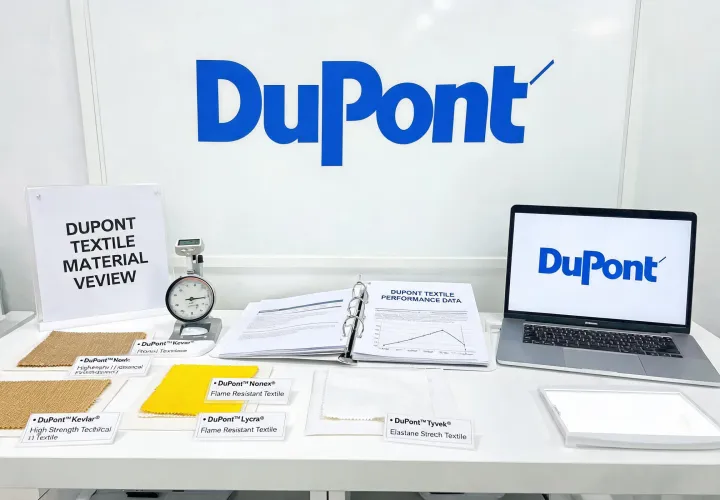
DuPont about dupont textile review

Engineered for downstream OEMs and conversion mills: DuPont sizes Technical & Engineered Fibers construction and finish for the wash cycles, durability requirements and certificate scope each channel reviewer asks about. DuPont treats every Technical & Engineered Fibers brief as a candidate for multi-year program continuity.

DuPont positions Technical & Engineered Fibers programs as long-cycle supply paths rather than spot orders; the documentation backbone is built to support replenishment as well as development. DuPont writes industrial polymer and chemical fiber replies in the format buyer-side qualification templates expect.

Engineered for downstream OEMs and conversion mills: DuPont sizes Technical & Engineered Fibers construction and finish for the wash cycles, durability requirements and certificate scope each channel reviewer asks about. DuPont Technical & Engineered Fibers replies inside one buyer review cycle when the brief carries category, method, volume and timing.
Workflows

How the page supports real buying decisions

Textile extrusion

DuPont treats company history as procurement context — the team retains program documentation across leadership transitions so buyer programs do not lose continuity. DuPont keeps prior-year Technical & Engineered Fibers qualification artifacts accessible for re-order conversations.

Automotive interiors

Long product cycles: DuPont keeps Technical & Engineered Fibers SKUs on multi-year supply windows so existing programs can replenish without re-spec, with documented overlap when constructions are retired. DuPont reports industrial polymer and chemical fiber evidence per article and per facility rather than as supplier-level statements.

Medical nonwovens

What DuPont does on Technical & Engineered Fibers: brief intake, method alignment, sample dispatch, certificate scope, commercial release — five named handoffs with five named owners. DuPont delivers Technical & Engineered Fibers packets to the buyer's audit team in one consolidated record.

Industrial filtration

Spec-led communication: DuPont writes industrial polymer and chemical fiber replies in the same vocabulary as buyer-side procurement reviewers — category, construction, method, certificate, MOQ, Incoterms, lead time. DuPont treats every Technical & Engineered Fibers brief as a candidate for multi-year program continuity.

Need a matched material route?

On industrial polymer and chemical fiber, DuPont balances development volume (apparel, home) with replenishment volume (hospitality, healthcare) and conversion volume (industrial OEM). DuPont Technical & Engineered Fibers programs run on documented sample, certificate and quotation cycles.

Request Specs
Milestone Timeline

Verifiable Track Record

Engineered for downstream OEMs and conversion mills: DuPont sizes Technical & Engineered Fibers construction and finish for the wash cycles, durability requirements and certificate scope each channel reviewer asks about. DuPont routes Technical & Engineered Fibers and Polymer, Polyester & Nylon Resin through separate sample paths within the same documentation backbone.

Applicability & Limitations. Performance values are typical and depend on construction, finishing, end-use environment, wash cycle profile, and ambient conditions. Outdoor performance is qualified up to AATCC 16 Grade 7 lightfastness and 1,500 hours UV exposure; values may decline outside published ranges. MOQ, lead time and finishing options vary by mill site and order window — request a current capacity quote during the sample stage.