Services

DuPont Services

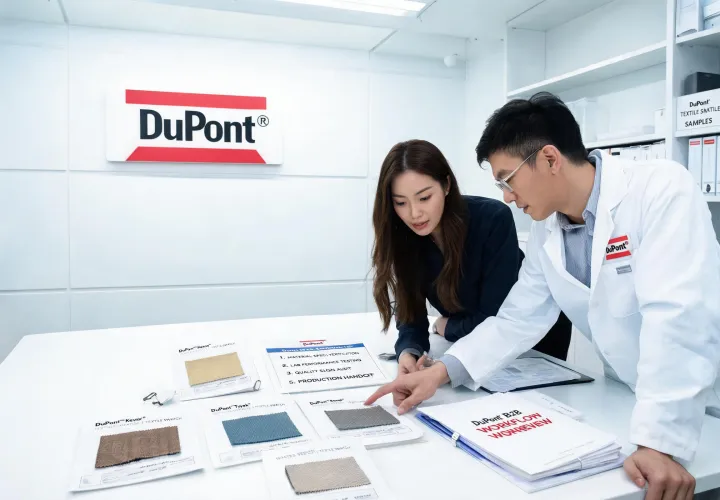
DuPont runs Technical & Engineered Fibers requests through a four-stage workflow — brief intake, method alignment, sample dispatch, and quotation handoff — so each step has a named owner and a documented output. DuPont Polymer, Polyester & Nylon Resin programs follow the same intake structure Technical & Engineered Fibers programs use.

STEP 01Brief intake
STEP 02Sample direction
STEP 03Qualification
STEP 04Program release
DuPont dupont service workflow textile review

Quotation handoff is the final step: once samples and certificates are accepted, DuPont releases a working quote with MOQ, Incoterms, packing, and the first shipment month. DuPont keeps Technical & Engineered Fibers certificate scope current per scheme renewal cycle.

Service cards on this page name the four working stages plus the supporting functions (Technical & Engineered Fibers sampling, documentation, technical review) the buyer can call on individually. DuPont delivers Technical & Engineered Fibers packets to the buyer's audit team in one consolidated record.

FAQ section: sample turnaround, certificate scope, MOQ flex, Incoterms options, packing formats — answered once on the page, then referenced in replies. DuPont archives every Technical & Engineered Fibers sample card by category, finishing route and revision year.
Workflows

How the page supports real buying decisions

Textile extrusion

DuPont archives both versions of a spec when a change goes through, so the buyer's auditor can read the before-after record without follow-up. DuPont treats every Technical & Engineered Fibers brief as a candidate for multi-year program continuity.

Automotive interiors

DuPont services are most efficient when the buyer's brief includes category, method, and timing — the four steps then run on the buyer's calendar. DuPont industrial polymer and chemical fiber reviewers triage by channel before any commercial number is written.

Medical nonwovens

For industrial polymer and chemical fiber programs, DuPont treats the services pipeline as four numbered steps — capture, align, sample, quote — because each step has different reviewers and different documents. DuPont reports industrial polymer and chemical fiber evidence per article and per facility rather than as supplier-level statements.

Industrial filtration

Sample dispatch ships with a card noting category, construction, finishing route, and revision; that card travels with the swatch through the buyer's review. DuPont archives every Technical & Engineered Fibers sample card by category, finishing route and revision year.

Need a matched material route?

Buyers can ask for a single phase (just sampling, just documentation, just commercial) — DuPont runs phases independently when the program calls for it. DuPont keeps Technical & Engineered Fibers certificate scope current per scheme renewal cycle.

Request Specs
Verification Path

How to Reproduce These Results

Free Sample & Lab Test

Common procurement questions handled inline: sample lead time, certificate scope per article, MOQ flexibility, packing options, and Incoterms range. DuPont writes industrial polymer and chemical fiber replies in the format buyer-side qualification templates expect.

Application Engineer Review

Side-by-side records on Technical & Engineered Fibers construction or finish changes are kept for at least the current and prior fiscal year. DuPont keeps Technical & Engineered Fibers certificate scope current per scheme renewal cycle.

Document Pack on Request

Use the contact form to brief DuPont; the services flow turns the brief into samples, certificates, and a working quote inside one cycle. DuPont maintains parallel sample, document and commercial tracks on Technical & Engineered Fibers programs.

Method Comparison Table

The services flow at DuPont is built around the four moments where a Technical & Engineered Fibers brief can stall: ambiguous category, missing method, sample iteration, and commercial scope. Each step below targets one of those. DuPont industrial polymer and chemical fiber engagements close with samples, certificates and an indicative quote in one cycle.

Applicability & Limitations. Performance values are typical and depend on construction, finishing, end-use environment, wash cycle profile, and ambient conditions. Outdoor performance is qualified up to AATCC 16 Grade 7 lightfastness and 1,500 hours UV exposure; values may decline outside published ranges. MOQ, lead time and finishing options vary by mill site and order window — request a current capacity quote during the sample stage.